
Meowdoku: Brain Puzzle Games
Oakever GamesPuzzle
4.715.46K Reviews
- Version
- 1.22.0
- Installs
- 10.00M
- Age Rating
- Everyone
Screenshots
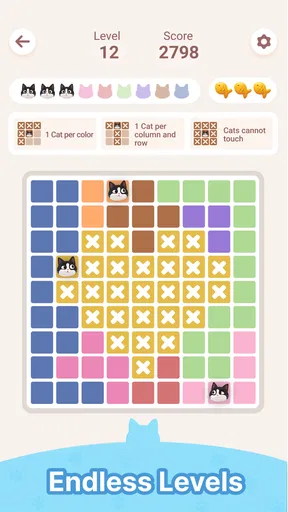
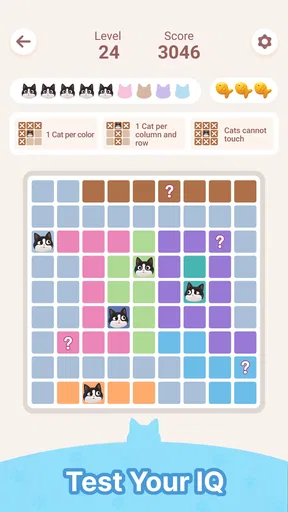
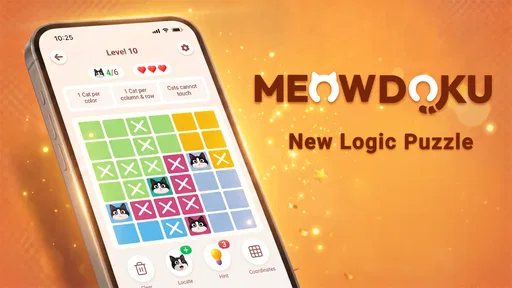
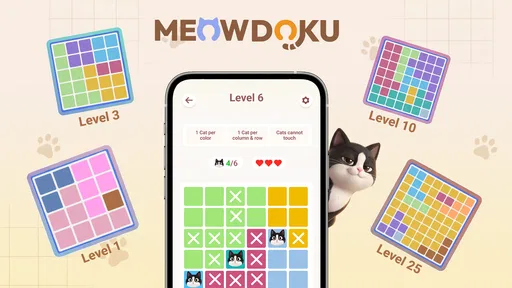
Our Review of Meowdoku: Brain Puzzle Games
 Analysis by Appyee
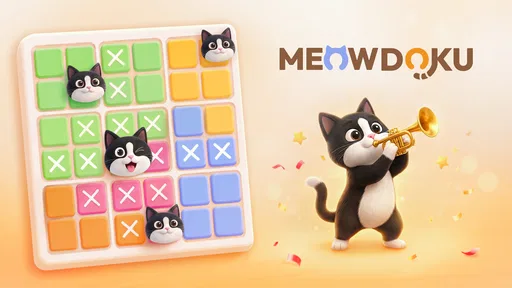
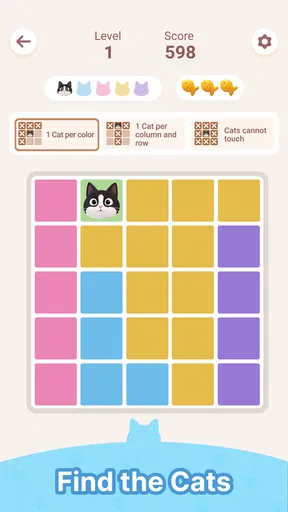
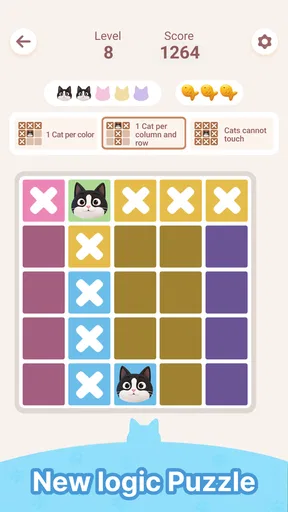
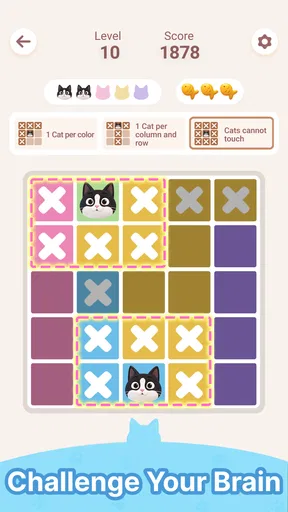
I approached Meowdoku: Brain Puzzle Games expecting a light cat-themed diversion, but its real appeal is the way it makes careful deduction feel approachable. This is a free puzzle game from Oakever Games that combines the familiar logic of Sudoku with the territory-finding idea associated with Minesweeper. Instead of simply filling numbers or blindly opening squares, I have to read the clues, test what is possible, and gradually work out where each cat’s area belongs.
That combination gives the game a distinct rhythm. It is quiet enough for a short break, yet demanding enough to hold my attention when I want something more thoughtful than a quick arcade round. The presentation is friendly and suitable for Everyone, but the puzzles are not automatically effortless. Some boards reward a fast first pass, while others make me slow down and revisit assumptions. That balance is the main reason I can imagine recommending it to someone who enjoys logic games but wants a softer, more playful setting.
Where players are most likely to get stuck
The first possible stumbling block is understanding how the two puzzle traditions fit together. People who already know Sudoku may expect a conventional grid with familiar number placement. Players coming from Minesweeper may instead look for obvious danger markers and immediate deductions. Meowdoku asks for a different mindset: the clues are useful only when I consider their relationship to neighboring spaces and the larger territory pattern.
I found that the most common mistake is treating every move as an isolated decision. A square that looks harmless on its own can become important when compared with the remaining possibilities in its row, column, or surrounding area. When I stopped asking “What can I place here?” and started asking “Which locations are still possible for this clue?” the boards became much easier to read.
Another source of friction is rushing through the opening moves. Early deductions can feel obvious, so it is tempting to tap quickly and trust instinct. That works on simpler layouts, but it can leave me with a confusing board later if I have mentally accepted an incorrect assumption. I recommend using the opening stage to establish certainty rather than speed. A few deliberate moves usually save more time than trying to solve the whole board in one burst.
The cat theme also creates a small expectation gap. The game looks playful, but the core experience is still a logic exercise. If someone wants a story-driven cat game, a collection of action challenges, or a decoration-focused experience, this is probably not the right match. The cats provide identity and charm; the actual reason to stay is the puzzle structure.
The most useful habit is to separate confirmed information from guesses. I mentally treat a move as confirmed only when the surrounding clues support it directly. If I merely prefer one possibility, I leave it unresolved and continue elsewhere. That simple discipline is especially valuable when a board contains several similar-looking choices.
Reading a board without creating extra confusion
When I begin a puzzle, I scan for clues with the fewest remaining possibilities. These are usually more valuable than clues that touch a large, open region. I then compare them with nearby spaces and look for overlaps: if two clues can both use only a small shared group of locations, those locations become less available to other clues. This is a familiar logic technique, but the game’s hybrid format makes it feel less mechanical than ordinary Sudoku.
I also avoid filling every uncertain area immediately. Leaving a question open is not a failure; it preserves information. Once another part of the board is solved, that unresolved area often becomes obvious without any guesswork. This approach makes the experience calmer and reduces the chance that I will need to retrace a chain of mistaken decisions.
For new players, the best starting point is not necessarily the visually busiest part of the board. I look for a clue that is constrained by several already-understood spaces, solve what it proves, and then return to the surrounding region. The game becomes more manageable when I treat it as a sequence of small deductions instead of one large picture.
Setup checks before blaming the puzzle
Because this is a mobile game, the first practical check is compatibility. The current version is 1.14.2 and requires Android 7.0 or later. On a supported device, I would still make sure the operating system is reasonably up to date and that the game has enough free storage to install or update normally. Those are basic checks, but they prevent a surprising amount of frustration before the puzzle itself is even involved.
The game is free to install, which makes trying it low-risk. It includes in-app purchases ranging from $3.99 to $69.99 per item, so I would review purchase controls before handing the device to a child or allowing unsupervised play. The Everyone content rating makes the title broadly accessible, but an age rating does not replace sensible device-level purchase settings.
If an update appears stuck, I would first check whether the device has a stable connection, enough space, and an active app-store session. I would avoid repeatedly tapping the install button, since that can make it harder to tell whether the problem is the store, the device, or the game. Closing the store, reopening it, and trying again after confirming the basics is a cleaner process.
On a phone with a small display, touch accuracy can affect puzzle entry. I prefer holding the device in the orientation that gives the grid the most comfortable size and keeping the screen free of overlays. If taps seem to land beside the intended square, I check whether a case edge, screen protector, or accessibility magnification setting is interfering before assuming the puzzle input is broken.
Performance expectations matter as well. This is a turn-based logic game, so it does not need the same responsiveness as a fast action title. A short pause while loading is different from lost input, repeated crashes, or a screen that stops responding. Distinguishing those symptoms helps me choose a sensible next step instead of randomly reinstalling the app.
Simple checks that protect a good puzzle session
I like to begin difficult boards when the phone has enough battery and when I am not likely to be interrupted. That sounds obvious, but interruptions are particularly costly in deduction games because I may forget which possibilities I had already ruled out. If I need to leave, I make a quick mental note of the unresolved region rather than tapping hurriedly before switching away.
I also keep purchase confirmation enabled on shared devices. The game’s free entry point is convenient, but accidental transactions are an avoidable distraction. A few seconds spent checking the device’s store settings is more useful than trying to solve a billing problem after the fact.
For someone deciding whether to try it, the popularity signals are encouraging without being the whole story: it has an average rating of 4.6 from around 259 thousand ratings and has passed 10 million installs. Those figures suggest that the basic concept works for a large audience, but they do not tell me whether the hybrid rules suit a particular player. I would still judge it by the kind of concentration I enjoy.
Recovering a puzzle workflow when progress feels wrong
When I reach a position that seems impossible, I do not immediately assume the board is unfair. I first retrace the last few deductions and identify the earliest move that depended on an assumption rather than a certainty. In logic puzzles, the visible problem often appears several steps after the actual mistake. Returning to the first uncertain decision is faster than trying to repair every later move individually.
A useful recovery method is to choose one small region and list what it still permits. I compare that list with the clues that touch the region, then remove options already claimed elsewhere. This narrows the problem without requiring me to remember the entire board. It also reveals whether I have overlooked a straightforward deduction or genuinely reached a point where I need to reconsider my path.
I avoid using random taps as a rescue strategy. Guessing can produce a temporarily clean-looking board, but it removes the satisfaction of knowing why the solution works. It also makes later errors much harder to locate. If the game offers a way to restart or revisit a puzzle, a deliberate restart is preferable to building on an unexplained guess; if I am simply stuck, taking a short break often helps me notice a relationship I missed.
Another practical tip is to solve from the most constrained evidence outward. I do not repeatedly scan the whole screen hoping for inspiration. Instead, I select a clue with a narrow set of legal locations, resolve what it affects, and then scan only the neighboring rows, columns, or territory boundaries. This creates a repeatable workflow and keeps the visual load under control.
For short sessions, I sometimes stop after reaching a stable checkpoint in my reasoning rather than forcing a complete solution. That makes the game work well during a commute wait or a coffee break. The key is to stop after a confirmed deduction, not in the middle of a chain of guesses. When I return, I know exactly which information is reliable.
Who benefits most from this style of puzzle
Meowdoku suits players who like Sudoku but want more visual uncertainty, as well as Minesweeper fans who prefer a gentler, more structured form of deduction. It is also a good option for someone who wants a game that can be played in focused bursts without requiring a large time commitment. The cat presentation makes the logic feel less severe than a plain numbered grid, which may help newcomers stay with a difficult board.
I would be more cautious recommending it to players who dislike trial-and-error feelings, even when the intended solution is logical. The hybrid design can take time to understand, and anyone looking for instant feedback may find the deliberate pace slow. Traditional Sudoku is the better choice when I want a familiar rule set and a strong emphasis on rows, columns, and boxes. Classic Minesweeper is better when I want quick local deductions and a more direct risk-reward loop.
It is also not the best fit for a player who wants a narrative campaign, character progression, or a competitive multiplayer focus. The appeal is the board in front of me and the satisfaction of resolving it. That narrow focus is a strength for puzzle fans, but a limitation for people who need more variety around the central mechanic.
When the app may not be the cause of the problem
If a puzzle feels unusually difficult, I first consider my own reading of the clues. A board can appear contradictory because I have confused a confirmed territory with a possible one, or because I have applied a Sudoku habit to a space governed by the game’s broader hybrid logic. Rechecking the rules and reviewing the earliest uncertain move is more productive than assuming the software generated an invalid challenge.
If taps are delayed or ignored, I separate input problems from puzzle problems. I test a few deliberate touches in different areas, check whether another app behaves normally, and make sure the screen is clean and unobstructed. If the entire device is sluggish, the cause may be system load or low available space rather than the game.
For loading or update trouble, I check the connection and the app-store process before clearing anything or reinstalling. Reinstallation should be a later step because it can interrupt access to local progress, depending on how the device and app handle saved state. I would only take that route after making sure I understand what might happen to unfinished puzzles.
Billing confusion should likewise be handled at the store-account level first. Since optional purchases are available, a pending charge, failed transaction, or accidental tap may involve the platform’s payment process rather than the puzzle software itself. Checking the purchase history and device account is a safer first response than repeatedly attempting the same transaction.
These checks are not glamorous, but they matter because the game’s simple premise makes technical friction feel especially noticeable. When the board is the only thing I want to think about, a small setup issue can seem like a design flaw. Separating those causes helps me judge the actual puzzle experience fairly.
My practical verdict after spending time with it
Meowdoku: Brain Puzzle Games is a focused, approachable logic game with a genuinely useful twist on two established puzzle formats. I like that the cat theme does not overwhelm the deduction, and I appreciate that the boards encourage patience rather than reflexes. The strongest experience comes when I treat each move as evidence, keep guesses separate from facts, and work outward from the most constrained clues.
The free price makes it easy to test, while the Everyone rating broadens its audience. At the same time, the presence of in-app purchases means shared-device users should check purchase safeguards. The game’s current release is 1.14.2, and its broad adoption—more than 10 million installs—shows that the concept has found a substantial audience. Still, popularity cannot replace personal fit: players who want standard Sudoku, classic Minesweeper, or a story-heavy cat game may be happier elsewhere.
My recommendation is strongest for people who enjoy calm concentration and want a puzzle that feels familiar for a moment before asking them to adapt. I would suggest starting slowly, learning how the territory clues interact with the Sudoku-like structure, and resisting the urge to guess when a board becomes confusing. If you enjoy the feeling of discovering a solution one deduction at a time, this is an easy game to keep on a phone for spare moments.
My bottom line is simple: try it if you want a thoughtful puzzle with a friendly identity, but choose a traditional alternative if you prefer completely familiar rules. Its best moments come from careful observation, not speed, and its main weakness is the learning curve created by blending two different logic habits. Once that curve makes sense, the game becomes a pleasant daily brain exercise rather than just another themed grid.
Privacy and Permissions
See what permissions an app requests and how it handles your data.
- Wi-Fi connection information
- view Wi-Fi connections
- Other
- view network connections, full network access, control vibration, prevent device from sleeping, read Google service configuration
Verdict
Strengths of Meowdoku: Brain Puzzle Games
- Relaxing cat-themed design makes short sessions feel enjoyable.
- Multiple puzzle modes provide variety beyond standard Sudoku.
- Helpful hints make difficult boards approachable for beginners.
- Works well for quick offline play during commutes or breaks.
- Gentle progression encourages regular practice without intense pressure.
Limitations of Meowdoku: Brain Puzzle Games
- Some advanced puzzles may feel repetitive after extended play.
- Hints can reduce the challenge if used too frequently.
- Ads may interrupt gameplay in the free version.
- Small interface elements can be awkward on compact screens.
- Players seeking competitive multiplayer may find the experience limited.
Other Releases by Oakever Games
View All

Similar Picks in This Category
View All
Block Blast!
HungryStudio4.8

Braindom: Brain Games Test
Lahana Game Studio4.6

AMAZE!
CrazyLabs LTD4.6

Sudoku - Classic Sudoku Puzzle
Oakever Games4.7

Art Puzzle - Puzzle Games
Easybrain4.8

Amaze GO!
Oakever Games4.9
Frequently Asked Questions
What is Meowdoku: Brain Puzzle Games?
Meowdoku: Brain Puzzle Games is a cat-themed logic puzzle app built around Sudoku-style challenges. Players place numbers or symbols according to the rules of each board while trying to complete puzzles without repeating values in rows, columns, or sections. Its colorful presentation and feline characters make the experience feel more casual and approachable than a traditional Sudoku game, while still requiring concentration and logical thinking.
Is Meowdoku suitable for beginners?
Yes, Meowdoku is generally suitable for beginners because its puzzle format can be learned gradually. New players can start with easier boards and become familiar with the rules before attempting more demanding challenges. The visual design also makes the game feel less intimidating than many classic brain-training apps. However, later puzzles may require patience, careful planning, and the ability to recognize patterns rather than simply making quick guesses.
Can Meowdoku be played offline?
Many puzzle apps allow their core boards to be played without a constant internet connection, and Meowdoku is designed primarily as a self-contained logic game. Even so, some features may depend on connectivity, including advertisements, cloud-related services, updates, analytics, or optional purchases. If offline access is important to you, install the latest version and test a puzzle after temporarily disabling your connection, since availability can change between updates and devices.
Does Meowdoku contain advertisements or in-app purchases?
Meowdoku may use advertisements or optional in-app purchases as part of its free-to-download model. Ads can appear between puzzles or when players request certain conveniences, while purchases may be offered for removing advertising, obtaining hints, or unlocking additional content. Before downloading, review the current store listing and purchase information, especially if the app will be used by children or on a device with unrestricted payment access.
Is Meowdoku: Brain Puzzle Games safe for children?
Meowdoku’s non-violent puzzle gameplay and friendly cat theme make it appropriate for many children, particularly those who enjoy number games and quiet problem-solving activities. Nevertheless, parents should check the app’s current age rating, advertising practices, privacy details, and any available purchases before installation. If younger children use the game, parental controls are recommended to prevent accidental purchases and limit exposure to unsuitable third-party advertisements.
Play our best games!


